Driving Discoveries 2025: prize winners
The Kidney Research UK team gathered in Bristol for our annual research conference ‘Driving Discoveries 2025’. We saw many amazing presentations and posters throughout the two-day meeting, and we were delighted to award the following prizes:
Best oral presentation award
Dr Daniyal Jafree, University College London & Wellcome Trust Sanger Institute
Daniyal shared his work looking at how lymphatic vessels in kidney transplants change when the transplant is rejected by the immune system.
The lymphatic system is made up of lymphatic vessels. These tiny tubes form a neat network in kidneys and other organs, and act like a drainage system to help clear excess fluid, waste and immune cells. When disease happens, they are vital for keeping inflammation under control.
Despite the importance of lymphatic vessels in health and disease, there is very little understanding of the role of these vessels in kidney transplantation. Because of this, when transplants are performed in the hospital, the lymphatic system is often overlooked.
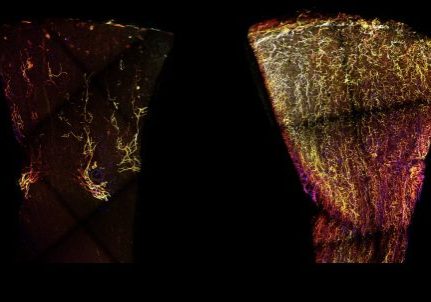
Using advanced 3D imaging at University College London, Daniyal examined kidney tissue from healthy donors and rejected transplants. In healthy kidneys, lymphatic vessels sat in a well-organised tree-like arrangement, while in rejected ones, they were overgrown and disorganised in a way that may cause immune cells to become trapped, unable to escape and therefore making rejection worse.

Daniyal then worked with the Sanger Institute and University of Cambridge to do a very detailed analysis of what happens to lymphatic vessels. The team showed that lymphatic vessels try to reduce inflammation but are also damaged by harmful antibodies. This suggests that they are caught in the middle: lymphatics in kidney transplants try to help the immune system during rejection but also get attacked, making rejection worse and further damaging the transplant.
Daniyal's findings provide a new perspective on what lymphatic vessels do in our kidneys, and how they change during transplant rejection. This work highlights lymphatics as a potential new treatment target to protect donated kidneys.
“Back when I was an undergraduate medical student, Kidney Research UK introduced me to the world of discovery science by supporting me with a scholarship to undertake an intercalated science degree. Ever since, I have been hooked on kidney research, working with amazing scientists and clinicians to apply the coolest laboratory techniques to better understand kidney disease and transplant rejection. I attended my first Kidney Research UK event in 2016, and nearly ten years later, it was amazing to return to Driving Discoveries 2025 and see the exciting patient-centred research that Kidney Research UK are supporting around the country.” Dr Daniyal Jafree.
Best oral presentation award
Mr Sam Tingle, Newcastle University
Sam shared his work on using specialised ultrasound scans to check the health of donated kidneys.
Every year thousands of donated kidneys are discarded if there are doubts about the health of the kidney, however new research suggests it could now be possible to repair kidneys that are not suitable for donation.
Research suggests that when the kidney is injured, blood fails to reach certain parts of the kidney. Sam and the team used specialised ultrasound scans to look at blood flow to specific parts of the kidney whilst the donated kidney is being kept alive outside of the body using machine perfusion.
These scans were done in model kidneys and human kidneys donated for research and in both settings, lack of blood flow in the small blood vessels of the kidney was associated with increased markers of kidney injury. Unlike other markers of kidney injury such as biopsy or blood tests, the scan gives an immediate result. This is important in the time-critical setting of kidney transplant.
Sam’s work has shown that developing an ultrasound scan to assess the viability of donated kidneys could give clinicians a better understanding of donated kidney health.
In the future this could mean more suitable kidneys are transplanted and reduce the number of kidneys that do not get used for transplant, meaning more patients could receive a transplant sooner.
“Support from Kidney Research UK has allowed me to take time away from being a surgeon to focus on kidney research. This dedicated time has been essential for carrying out early studies that give us confidence in these ultrasound scans, before we move to larger clinical trials. It is a privilege to have this research acknowledged with a Driving Discoveries award.” Mr Sam Tingle.

Best poster award
Jack Fairbank, CEO of Hylid Diagnostics
Jack shared his work on potassium home monitoring for kidney disease.
In healthy individuals, the kidneys control potassium levels. This key mineral plays a crucial role in the body – it helps to balance blood pressure and supports nerves and muscles. If the kidneys are not working properly, potassium levels in the body can become dangerously high or low. Either can result in serious heart problems, often with few and nonspecific symptoms. Without frequent potassium monitoring, patients do not know when and how to take action to avoid these problems.
Currently, potassium can only be measured via a blood test at the hospital or GP surgery. This can be time-consuming, costly and may give readings that do not reflect current levels due to a delay between giving the sample and lab analysis.
One of our industry partners, Hylid Diagnostics, has developed a lab-quality, portable potassium test for home use that uses a finger-prick blood sample to deliver results in five minutes. Jack shared how in their experiments this test, when compared to hospital laboratory instruments, consistently and accurately measures potassium, without being skewed by broken red blood cells (haemolysis).
This work may enable CKD patients to monitor potassium reliably at home.
“It was a pleasure to show our blood-testing system at the Driving Discoveries conference – particularly to kidney patients who are all too familiar with the anxiety and serious consequences associated with potassium imbalance. Hearing firsthand from patients about the importance of potassium monitoring inspires our work to safely bring this device to market soon.” Jack Fairbank.

*Whilst this innovation is exciting and shows promise, it is still in the early stages of development. This means it may not yet work as well in real-life situations as it does in research settings. More testing is needed to make sure it can be used safely by patients or clinicians.
Latest research news

Could understanding blood pressure changes during sleep in kidney patients be key to protecting heart and vessel health?
New results suggest that bladder cancer could be caused by the body’s response to common childhood virus

SMC approval of mercaptamine offers new hope and choice for people living with cystinosis in Scotland



Research looking at repurposing drugs to treat polycystic kidney disease shows promising new results
Personalising treatments for focal and segmental glomerulosclerosis patients receiving a kidney transplant


Why not make a donation now?
Every £ counts towards transforming treatments for people living with kidney disease.