

Can specialised eye scans be used to monitor kidney disease progression?
A kinder way to monitor kidney health
Currently, monitoring kidney health often relies on blood tests and, in some cases, biopsies (taking a small tissue sample from the kidney), both of which can be invasive and uncomfortable.
In December 2023 we reported on the promising results from a study by Professors Neeraj Dhaun (Bean), Matt Bailey and the team at the University of Edinburgh. With funding from Kidney Research UK, the researchers showed that specialised eye scans, called optical coherence tomography (OCT) could be used to monitor kidney disease progression.
What can the eyes tell us about the kidneys?
The eye and the kidney are structurally similar, as are the pathways to disease, and so some diseases might present in a similar way in both organs. This enables researchers to gain important insights into kidney function by studying the eye.
The team at Edinburgh used a non‑invasive imaging technique called optical coherence tomography (OCT) to measure thickness of the retina and choroid – structures at the back of the eye that help you to see and keep the eyes healthy.

The study found that patients with chronic kidney disease (CKD) had thinner retina and choroid layers than healthy volunteers, and that the thinning got worse as kidney function declined. In kidney transplant patients, retinal and choroid layers thickened as kidney function improved, and the thickness also predicted future kidney decline.
These results suggested that simple eye scans might offer a non-invasive, early warning system for kidney disease and a way to monitor treatment progress.
Seeing the potential. Where are we now?
To further understand the mechanisms that cause these eye changes to occur in line with kidney changes, with continued support from Kidney Research UK, the team are now working on experiments in the lab to see if there were changes to the eye that happened following acute kidney injury (AKI). They will also be looking at whether the eye shows improvement when kidney function improves due to treatment.
By using the same OCT scanner previously used with patients, they have conducted laboratory experiments with models to further look at the eye and its blood vessels and are now analysing images.
An eye into the future for kidney disease. What can we expect?
So far, this work has suggested that a simple eye scan could give doctors a clear view of kidney health and how the disease is progressing. Continued work at the University of Edinburgh is underway to develop these initial indications into a foundation for a device pathway for patients with CKD.
This approach could transform how we monitor kidney disease making it more less invasive and kinder to patients.


“This is an important next step to validate our methodology and demonstrate its effectiveness in models of kidney disease, paving the way for potential clinical applications.
“Our early research shows that the eye is a useful window into the kidney, and we hope that in the future, this approach will help identify more people with early kidney disease, providing an opportunity to start treatments before it progresses.” - Bean
Latest research news

Could understanding blood pressure changes during sleep in kidney patients be key to protecting heart and vessel health?
New results suggest that bladder cancer could be caused by the body’s response to common childhood virus

SMC approval of mercaptamine offers new hope and choice for people living with cystinosis in Scotland



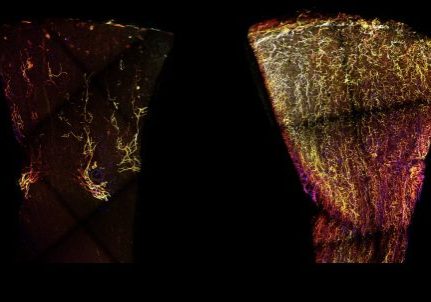


Research looking at repurposing drugs to treat polycystic kidney disease shows promising new results

Personalising treatments for focal and segmental glomerulosclerosis patients receiving a kidney transplant


Why not make a donation now?
Every £ counts towards transforming treatments for people living with kidney disease.