
What is cystinuria?
Cystinuria is a rare, inherited condition, estimated to affect 1 in 7,000 people. Individuals with cystinuria are more likely to develop kidney stones and the condition usually presents between 10 and 30 years old.
What causes of cystinuria?
People with cystinuria have problems taking cystine back into the body (known as ‘reabsorption’). Cystine is an amino acid, the molecules which form the ‘chemical building blocks’ of proteins in our cells and body tissues. Cystine is usually reabsorbed by the kidney. Higher concentrations of cystine in the urine can form stones.
Mutations in two genes, called SLC3A1 and SLC7A9, are known to cause cystinuria. Genes make up our DNA and carry instructions/codes for proteins to be made by a cell. The SLC3A1 and SLC7A9 genes code for two parts of a protein in kidney cells that transport cystine. Mutations in either SLC3A1 or SLC7A9 mean this transport protein cannot reach the surface of the cell to remove cystine from the urine.
Individuals with symptoms of cystinuria may have one or two copies of the altered gene, depending on the type of cystinuria. Each gene has two copies, one from each parent. If it is the SLC3A1 gene which is altered, this is an autosomal recessive type of inheritance, meaning patients need two copies of the altered gene to experience symptoms of the disease.
If it is the SLC7A9 gene which is altered, this is an autosomal dominant type of inheritance, meaning patients need only one copy of the altered gene to experience symptoms of the disease. However, in this type of cystinuria not all patients with a copy of the altered gene have cystinuria, this is called incomplete penetrance.
Symptoms of cystinuria
Development of the first symptom causing stone in cystinuria is usually between 10 and 30 years old.
Symptoms of a urinary stone can include:
- Severe, intermittent pain on the back or sides of the abdomen (belly) to the top of the thighs.
- Sickness, both feeling and being sick.
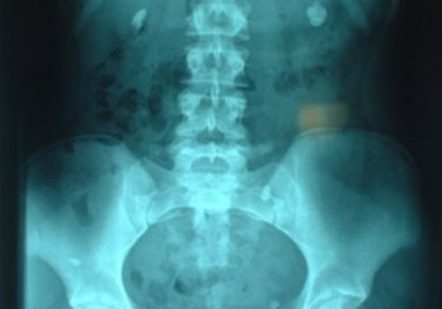
Kidney stones can block urine flow meaning waste products and bacteria can accumulate which can lead to infection. Both the development of stones and infections can damage the kidneys.
Diagnosis of cystinuria
Usually, cystinuria is diagnosed by examining a stone which has been passed, or the urine, for high levels of cystine.
Additional tests:
- A blood or urine test may be used to assess any damage to the kidneys.
- Genetic testing may be offered in some situations, for example if there is a family history.

Treatment for cystinuria
Treatment decreases the likelihood of forming stones but doesn’t prevent it from happening.
Lifestyle changes
- Drinking more fluid – to dilute cystine in the urine and prevent it from forming stones. It is recommended people with cystinuria drink enough to produce 3 liters of urine a day.
- Reducing salt intake – lower salt intake decreases the amount of cystine removed from the body by the kidneys meaning a lower concentration in the urine.
- Although not shown to decrease the risk of stone formation, it is recommended people with cystinuria do not consume a very high protein diet, as these are sources of methionine, an amino acid broken down into cystine. People with cystinuria may be advised to eat a balanced healthy diet rich in fruit, vegetables and wholegrains.
Medication
- Medications such as potassium citrate can raise the pH of the urine making it more alkaline. Making the urine more alkaline helps dissolve cystine meaning it is less likely to form stones.
- Medications, such as penicillamine, bind to cystine making it less likely to form stones. However, this medication does have side effects such as rashes, painful joints, blood disorders and changes in kidney function. Owing to the side effects, these types of drugs are only considered if lifestyle changes and controlling urine pH is not enough to prevent stone formation.
There are several treatment options for kidney stones which depend on the size, type and location of the stone.
Useful resources
For more information about cystinuria, visit CystinuriaUK
Reviewed February 2025
Our latest kidney research

Could understanding blood pressure changes during sleep in kidney patients be key to protecting heart and vessel health?
New results suggest that bladder cancer could be caused by the body’s response to common childhood virus

SMC approval of mercaptamine offers new hope and choice for people living with cystinosis in Scotland





Research looking at repurposing drugs to treat polycystic kidney disease shows promising new results